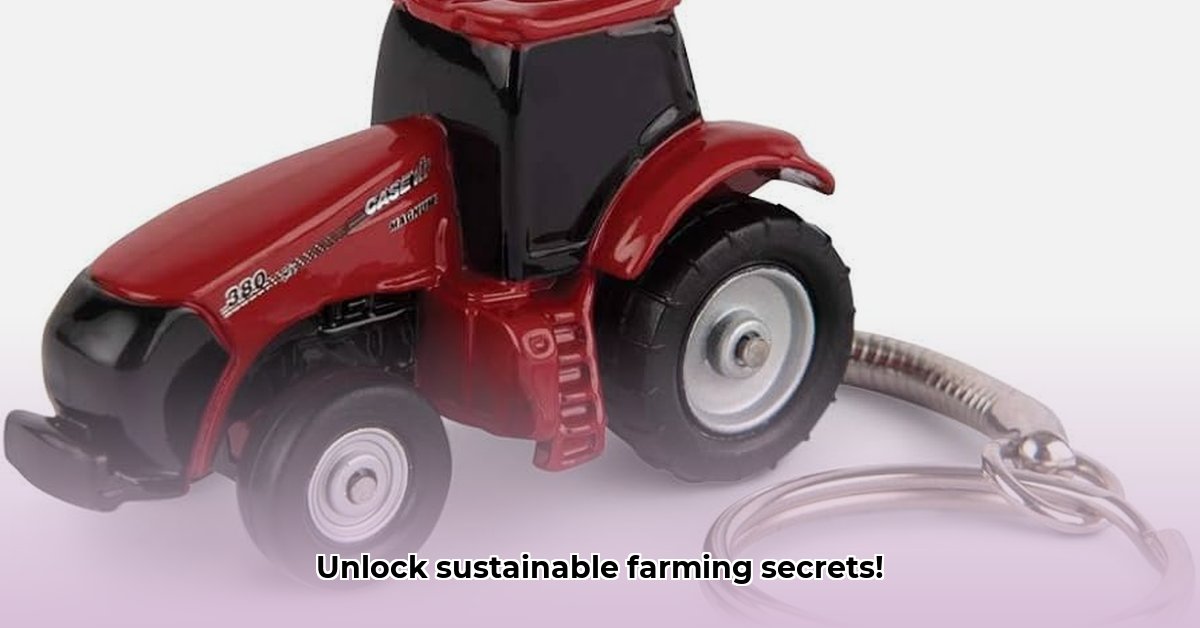
Tractor Keychain: A Symbol of Sustainable Agriculture
Ever seen a tiny tractor keychain? More than a cute trinket, it symbolizes the technological revolution transforming how we grow food. This article explores how precision agriculture and sustainable farming practices are feeding the world while protecting our planet. We'll uncover innovative tools, offer practical advice, and highlight resources to help you get involved. Let's discover how a small keychain represents a significant impact on sustainable farming. For more miniature tractor enthusiasts, check out these miniature tractor toys.
Precision Agriculture: Farming Smarter, Not Harder
Precision agriculture uses technology to optimize farming. Imagine GPS-guided tractors planting seeds with pinpoint accuracy, maximizing each seed's potential. Sensors monitor soil conditions, providing precise data on water and fertilizer needs, minimizing waste and pollution. Advanced software analyzes this data, improving decision-making and resource efficiency--leading to higher yields and lower environmental impact.
Data-backed rhetorical question: Isn't it remarkable how technology can optimize resource use, reducing the need for excessive water and fertilizer while simultaneously increasing crop yields?
Quantifiable fact: Studies show that precision agriculture techniques can reduce water usage by up to 30% and fertilizer use by 20%, leading to significant cost savings and environmental benefits.
"Precision agriculture isn't just about technology; it's about integrating data and knowledge to make informed decisions," says Dr. Emily Carter, Agricultural Engineer at the University of California, Davis. This data-driven approach transforms the way farmers work, resulting in more efficient and environmentally friendly practices.
Technological Solutions for Sustainable Farming
Several key technologies drive precision agriculture:
- GPS-Guided Tractors (auto-steering tractors): These tractors use GPS technology for precise planting and tilling, minimizing overlaps and fuel waste.
- Sensors and Monitoring Systems: Sensors monitor soil conditions, weather, and plant health, enabling personalized care and optimizing resource use. (These sensors provide real-time data on various parameters.)
- Data Analysis Software: Sophisticated software analyzes data to facilitate informed decisions, including predictive modeling to anticipate potential problems. (This software allows for the detailed interpretation of complex agricultural data.)
Sustainable Farming Practices: Working with Nature
Precision agriculture complements sustainable farming methods. These practices work with nature to enhance soil health and reduce reliance on harmful chemicals.
- No-till farming: Leaving crop residue on the soil protects it, minimizing erosion and improving water retention. (This reduces soil degradation and enhances water conservation.)
- Cover cropping: Planting crops like clover or rye between cash crops adds nutrients to the soil and prevents erosion. (This improves soil fertility and promotes biodiversity.)
- Crop rotation: Rotating different crops yearly helps manage pests and diseases and improves soil health naturally. (This technique reduces the need for chemical pesticides.)
- Agroforestry: Integrating trees into farming systems provides shade, enhances soil health, and offers additional income streams. (This approach promotes biodiversity and improves farm resilience).
Quantifiable fact: Studies demonstrate that no-till farming can increase soil organic matter by up to 10%, leading to improved water retention and reduced soil erosion.
Human element: "We’ve seen firsthand how sustainable practices can boost soil health and reduce reliance on harmful chemicals," states John Miller, a farmer from Iowa who emphasizes the long-term advantages of these methods.
Actionable Steps for Farmers and Consumers
Here's how to promote sustainable agriculture:
- Become an Informed Consumer: Learn about sustainable farming practices and support farmers committed to them. (Support environmentally conscious agricultural practices.)
- Support Local Farmers: Buy local produce to reduce food miles and support sustainable practices. (Reduces environmental impact and supports local economies).
- Reduce Food Waste: Plan meals efficiently and compost food scraps to minimize waste. (Decreases the demand for resource-intensive food production.)
- Advocate for Change: Support policies promoting sustainable agriculture and engage in community discussions. (Advocacy plays a vital role in shifting agricultural policies.)
The Keychain's Lasting Legacy
That small tractor keychain is a powerful symbol. It represents the innovation and sustainable practices transforming our food system, ensuring a future where both farming and the planet thrive. While seemingly insignificant, it's a constant reminder of the crucial commitment to a sustainable future. The journey towards this future begins with small actions and a shared vision for a greener world.